Subdomain discovery — Standard
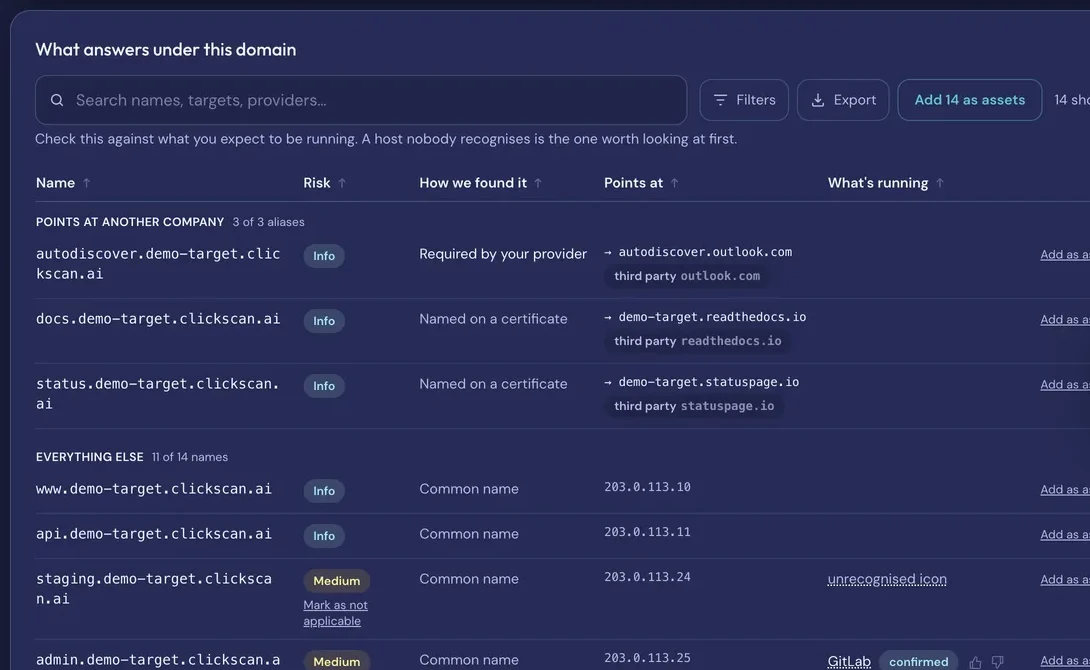
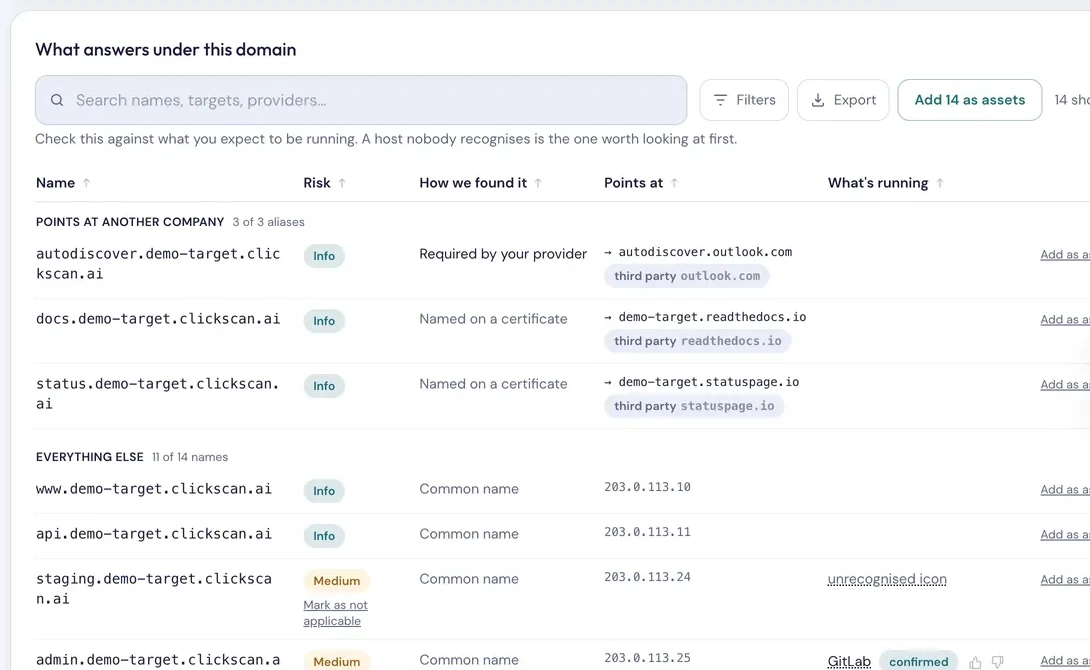
The other names attached to your domain — the staging site, the old gateway, the thing a contractor left running — and the ones pointing at a cloud service you stopped paying for, which anybody can claim. It asks your domain’s own name servers, reads the public certificate logs, and searches beneath the names it finds as well as beneath your domain. It reads the icon of up to 40 of the hosts it finds to identify the software — turning “this name suggests Jenkins” into “this host is running Jenkins”.
It also works out whether the domain is served through a filtering service — the kind that sits in front of a website to absorb attacks — and names the hosts that answer on their own address, around it. That is a way in that skips the protection you are paying for.
DomainWebsiteRuns on any target
5 credits a run; 4 a run on a schedule
Subdomain discovery — Deep
The same sweep, asking about more names — about ten thousand rather than two thousand. It takes considerably longer, and is worth it when you want an inventory you can stand behind.
DomainWebsiteRuns on any target
10 credits a run; 8 a run on a schedule
Domain and DNS Security Check
Whether the answers DNS gives about your domain can be trusted not to have been forged. DNSSEC in four states — not signed, signed but never anchored at the registrar, broken, or working — and each state comes with the one thing to change.
It also reads which certificate authorities you allow to issue for the domain, and compares that against the ones that actually have. An authority outside your list is flagged as something to look at rather than an accusation: your list may be out of date, the certificate may predate it, or somebody obtained one that should have been refused.
DomainWebsiteRuns on any target
1 credit a run; 1 a run on a schedule