
A breach exposure result is one of the easiest to misread. It does not mean your systems were compromised, or that ours were. It means an address of yours appeared in a publicly disclosed leak from somebody else's service — the forum you signed up to in 2014, the vendor that lost a database last year.
What matters is not the count. It is which types of data each leak contained.
What the check receives, and what it does not
ClickScan.AI receives only the list of data types each breach contained. Never the data itself, and never your password. There is nothing to steal from us, because we never hold it.
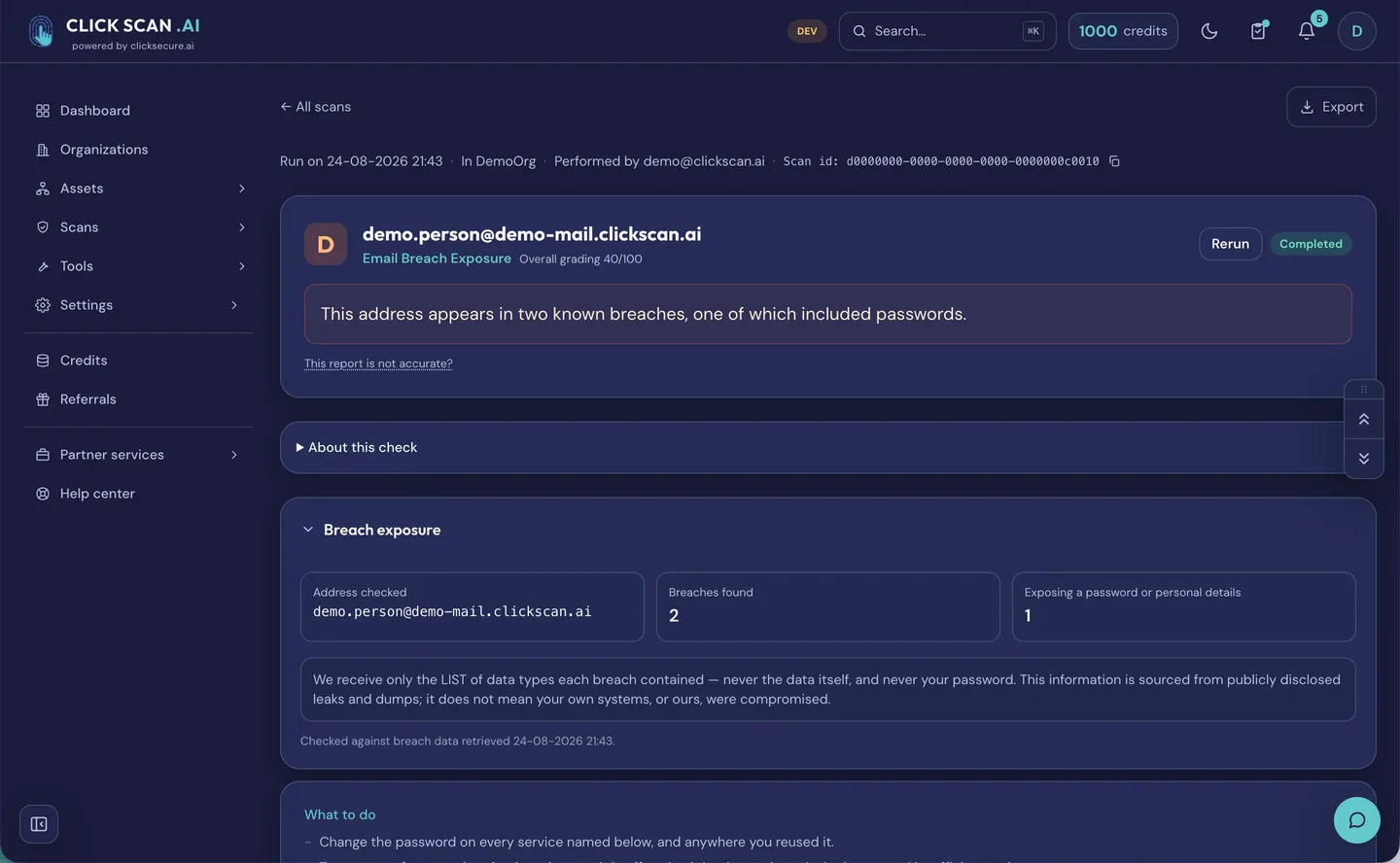
The check requires proven ownership of the mailbox — you cannot point it at a stranger's address.
Why the data types are the whole story
Two breaches is not a number that tells you anything on its own. The report separates them by what was exposed:
- A password. The serious one, and the reason credential stuffing works. Attackers take username-password pairs from one breach and try them everywhere else, at scale. If that password was reused anywhere, those accounts are already open — not at risk of being opened.
- Personal details. A phone number, a date of birth, a home address. Nothing to log in with, but exactly what makes a phone call or an email sound informed. Most successful social engineering is not clever; it just knows things it should not.
- An email address alone. Worth knowing, worth very little on its own.
The date on the answer
The date on the report is when the data was fetched, not when the scan ran. Answers are cached for a day, so re-running an hour later reports the same lookup honestly rather than claiming a freshness nobody paid for.
Finding nothing is graded A, and it is a real result rather than a failure — the most common outcome and the best one. It means nothing was found in the data the provider returned, as of that date.
What to do about it
Change the password on every service named, and anywhere you reused it. Turn on two-factor authentication wherever it is offered — it is what makes a leaked password insufficient on its own. Use a different password per service, so one breach stays contained. And treat unexpected messages that reference exposed details as suspicious, because that is what makes a scam sound informed.
Every new account gets free starter credits. Start at app.clickscan.ai, or see everything ClickScan.AI checks.